 Phone:0086-15355957068
 E-mail: sales02@dajiangmachine.com



Vacuum Packaging and Bag Materials Overviews
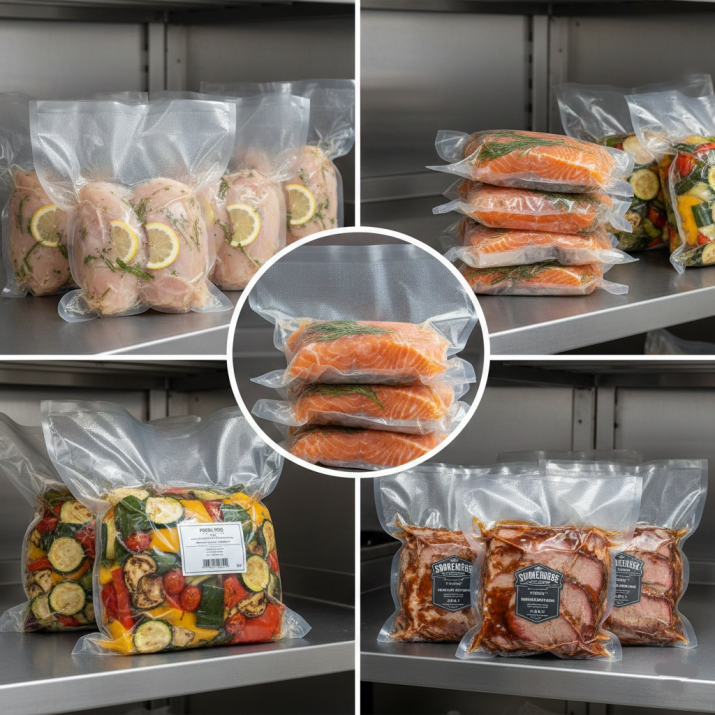
Vacuum packaging machines (chamber or suction types) extract air from product pouches or chambers before sealing bags to block external gases. This significantly extends shelf life by limiting oxygen exposure and inhibiting spoilage bacteria growth, with vacuum bags chosen based on characteristics like barrier properties, durability and heat sealing performance – usually multilayer laminate plastic laminates chosen based on specific criteria such as oxygen/moisture barrier protection, heat resistance, clarity and puncture toughness.
Nylon/PE (PA/PE) Vacuum Bags
* Composition and Properties: PA/PE bags feature a nylon (polyamide) outer layer laminated to a polyethylene inner sealing layer for puncture resistance, oxygen/aroma barrier protection and strong heat seals even at lower temperatures than plain PE films do. Compared with plain PE films, PA/PE laminates boast much higher oxygen/aroma barriers and puncture resistance, maintaining their dimensions throughout deep-freeze thermoforming processes while withstanding moderate heat during sealing processes.
* Applications: PA/PE pouches are often used for fresh and frozen meat products (beef, pork, poultry and seafood) due to the nylon resisting bone edges and sharp pieces; this helps preserve their color and flavor during extended cold storage. They’re also great for cheese and deli products to preserve flavor and texture by cutting oxygen ingress; their tough film can even vacuum-pack processed meats such as pates. Semi-liquid sauces can also be run through PA/PE bags due to strong seal layers that prevent leaks while retaining aromas – perfect for long cold storage periods! In short, PA/PE bags suit foods with irregular or hard edges (bones/chips of meat chips of meat chips), long refrigeration/freezing times needed – perfect!
* Other Uses: PA/PE laminates have numerous other applications beyond food, such as medical packaging and industrial components. Their high-barrier film can be sterilized and sealed to create medical kits; electronics packaging uses it to control moisture while adding mechanical strength while anti-static or barrier layers may be added for circuit boards or hardware packaging. Ultimately, PA/PE bags provide reliable workhorse film that has both high barrier strength and puncture resistance, making it a top choice for general vacuum packaging needs.
Polyester/PE (PET/PE) Vacuum Bags
*Composition and Properties: Polyester/PE pouches (often called PET/PE or PET-LDPE bags) use an outer PET layer with a PE inner layer for their composition. PET offers excellent chemical, thermal and oxygen barriers and its strength is 5-10x higher than PE’s tensile strength; furthermore it can retain physical properties over a wide temperature range, giving these bags see-through bags with moderate barrier capabilities (which offer clarity with moderate puncture resistance; but for items with very sharp points it may be preferable to use nylon layers).
* Applications: PET/PE vacuum bags are ideal for items requiring clarity and chemical resistance, such as cooked or smoked meats and fish that requires visibility for packaging quality issues. Their rigidity enables heat sealing on automatic machines; due to PET’s temperature stability properties they work equally well in refrigerated environments as ambient ones (e.g. vacuum-packed coffee beans or spices). Furthermore they’re often utilized as top films in thermoforming vacuum packaging lines (using PA/EVOH/PE forming webs).
* Technical Note: Polyester’s strong barrier to gases helps preserve aroma, but pure PET/PE does not possess the deep oxygen barrier and puncture toughness of PA/PE. As such, PET/PE may be preferable for vacuum-packed soups, powders, and lightweight snacks due to its softer or lighter construction; carePac notes that stronger polyester or nylon layers prevent punctures while making PET/PE suitable for vacuum sealing. In practice many processors opt for PET/PE for midrange shelf-life products with embossed textures (if using suction machines) in order to enhance sealing capabilities; these bags work particularly well when chamber units (high vacuum levels possible). PET/PE bags are compatible with all vacuum packaging machines; chamber units excel especially well at producing vacuum levels greater than other vacuum packaging machines (high vacuum levels possible).
High-Barrier Multilayer Films (EVOH, PVDC etc.)
High-Barrier Multilayer Films (EVOH, PVDC etc.) provide effective protection from ingress of harmful contaminants into the environment.
*EVOH-Based Bags: For maximum shelf life, multi-layer laminates incorporating an EVOH (ethylene-vinyl alcohol) barrier resin provide maximum shelf life and product loss prevention. Common structures for these laminates are PA/EVOH/PE or PE/EVOH/PE, with the EVOH core providing very low oxygen transmission rate while nylon or PET provides mechanical strength and sealability – this combination yields an ultimate high barrier: EVOH bags dramatically slow oxidation and moisture migration while simultaneously adding mechanical strength. According to experts’ reports, these laminates help achieve longer refrigerated or frozen shelf lives while simultaneously minimizing product loss compared with PA/PE laminates.
*Properties: EVOH film is clear and flexible, yet in vacuum bags it is often hidden by opaque layers that obscure it. These bags retain seal integrity during freezing while PE protects EVOH from moisture damage; their puncture toughness from PA layers often exceeds that of simple PA/PE without compromising seal strength.
* Applications: EVOH high-barrier vacuum bags are an ideal way to ship fresh/frozen meats and seafood long distances and store long term. EVOH vacuum bags also make an excellent way to protect high-value or oxygen-sensitive foods like cheese, nuts, dehydrated fruits or premium ready meals and sauces from oxygen loss or spoilage during transportation or storage. An EVOH bag should always be considered when quality (color, flavor or texture) preservation must be maintained; in other words use them whenever sous vide products need optimum conditions in transit or long term inventory storage needs!
*Other Barriers: PVDC-coated films used in some cheese or cured meat shrink pouches offer low O2 permeability; however, regulatory and processing issues have limited their usage. Vacuum metalized films (PET or PA coated with aluminum) also improve barrier function (see next section).
Aluminum Foil (Metallized) Vacuum Bags
Vacuum-packaging coffee, tea or spices often involves aluminum laminated bags for optimal protection. Aluminum foil layers within a pouch create an effective barrier against light, oxygen and moisture – ideal for keeping coffee fresh for longer! Typical foil-vacuum bags have three layers that serve to block light, oxygen and moisture: PET/AL/PE or PA/AL/PE – the outer PET film provides puncture resistance while puncture strength while AL foil blocks gas and light while PE ensures clean heat sealing – the result being virtually no air or moisture can get through!
* Properties: Aluminum-laminate bags can be rigid yet formable; they reflect heat and light, protecting from UV radiation and temperature changes, while remaining opaque so contents remain hidden while products stay dry and unoxidized. Furthermore, aluminum laminate bags work equally well in deep freezers or hot filling environments (note that foil bags cannot be oven safe without special treatment).
* Applications: Foil bags can be used for protecting high-value or highly perishable items such as coffee and tea (to preserve aroma and freshness), powdered or freeze-dried foods, nuts, and herbs. In food service settings, sous vide/boil-in-bag pouches often utilize foil; they’re ideal for pharmaceuticals/vitamins/supplements/vitamins etc. Additionally, vacuum-packed tea leaves tend to retain their flavor much longer when stored in foil laminate compared to plastic packaging (for instance) shown here is just an example!
* Machine Compatibility: Aluminum foil bags tend to be smooth and are sometimes sealed using heavy-duty machines, making DJVAC external vacuum packaging machines suitable for handling these bags without issue.
|
Food Type |
Recommended Vacuum Bag Material |
Reasons/Notes |
|
Fresh/Frozen Meat & Poultry (bone-in) |
PA/PE laminate (nylon/PE) |
Nylon layer resists bone punctures ; tough seals at freezer temps. Long shelf life. |
|
Lean Ground Meats, Fish |
PA/PE or PET/PE bag |
Nylon recommended for puncture safety; polyester/PE is clear, suitable if bones removed. |
|
Cheese & Dairy |
PA/PE or PA/EVOH/PE |
Oxygen-sensitive: PA provides barrier and puncture resistance ; EVOH for extended shelf-life (vacuum cheese pouches). |
|
Coffee Beans, Tea Leaves, Spices |
Foil-laminate bag (e.g. PET/AL/PE) |
Total barrier to O₂ and light ; preserves aroma. Often used with one-way valve for degassing. |
|
Nuts & Seeds |
Foil or EVOH bag |
High fat content oxidizes; use foil or high-barrier to prevent rancidity. Vacuum/SV packs. |
|
Frozen Vegetables, Fruit |
PA/PE or PET/PE bag |
Requires freezer-safe bag; PA/PE for heavy veggies; PET/PE for light pieces. (MAP also common.) |
|
Cooked/Prepared Meals |
PA/PE or EVOH bag, pouch form |
Oils and moisture: PA/PE pouches handle sauces; EVOH for long-term chill pack. |
|
Dry Goods (Flour, Rice) |
PET/PE or LDPE vacuum bag |
Oxygen barrier needed but puncture low risk; simpler films acceptable. |
|
Bakery (Bread, Pastries) |
PA/PE or PET/PE |
Sharp crust: nylon prevents tearing; embossed for fast sealing of irregular shapes. |
|
Liquids (Soup, Stock) |
Flat PA/PE or PET/PE bag |
Use chamber sealer (flat bag) to evacuate liquid. PA/PE for tougher seal. |
|
Pharmaceutical/Medical Kits |
PA/PE high-barrier |
Sterile, clean barrier; often PA/PE or PA/EVOH/PE for airtight pack. |
|
Electronics/Components |
PA/PE or Foil bag |
Use anti-static laminated bag or foil bag with desiccant. Protects against moisture and static. |
|
Documents/Archives |
Polyester (Mylar) or PE acid-free bag |
Non-reactive film; vacuum plus inert atmosphere blocks humidity and pests. |
Industrial and Archival Applications.
High-barrier vacuum bags offer more uses than just food:
Electronics & Metal Parts: As previously noted, vacuum bags for electronics and metal parts protect moisture-sensitive components during shipment. When combined with desiccant, vacuum environments provide an environment free of airborne oxidation or corrosion of metal parts. In contrast to food, PA/PE or foil vacuum bags may also be flushed with nitrogen before sealing using DJVAC machines that feature the appropriate clamps and controls to manage thicker foil or aluminium bags.
* Document Preservation: For optimal document preservation, archives typically use vacuum-sealed inert films like polyethylene or polyester/Mylar films to block oxygen and pests, creating airtight bags to avoid yellowing and mold growth in paper documents. As with food packaging, restricting oxygen further extends longevity – an airtight package extends the longevity of documents just like it extends it with food products.
* Pharma and Medical: Sterile medical kits must be vacuum-sealed using high-barrier pouches with PA/PE bags containing tear notches for ease of tear-notch opening, complying with FDA or medical standards.
In each of these cases, it’s key to use film rated for the product’s environment (for instance halogen-free for electronics or archival quality documents). DJVAC vacuum machines can accommodate various bag laminate sizes; customers should specify which film they require when placing orders with us.
How to Select Vacuum Bag Materials
Consider these factors when selecting a vacuum bag material:
*Blockage Needs: What conditions must the product remain fresh for? For short-term refrigeration applications, standard PA/PE or PET/PE bags may suffice; for months-long frozen storage or highly sensitive products that need protection against oxygen transmission use EVOH laminates with ultra low O2 transmission rates instead.
* Mechanical Protection: Will your item have sharp edges or be handled roughly? Prioritize puncture resistance (nylon-rich laminates or embossed texturing). Bulky industrial parts or bone-in meats require stronger films.
* Seal Method: Vacuum bags use heat sealing as their main method for sealing. PE (LDPE or LLDPE) is commonly used as sealing material, requiring sealing temperature range that matches that of your machine’s heat bars for proper sealing results. Certain high barrier films may require higher seal temperatures or heavier clamp pressure for proper adhesion.
* Food Safety and Regulations: Use FDA/GB approved food-grade films when providing goods to foreign markets; DJVAC works with bag suppliers who offer certified materials for this purpose. When selling foreign-bound films, compliance documentation may also be required.
* Cost/Performance Analysis: High-barrier EVOH or foil bags tend to be more costly; carefully evaluate their price relative to shelf life requirements – for instance, vacuum-packed nuts intended for export may merit this style while home freezers might prefer simpler PA/PE bags instead.
Processors often perform trials using sample bags provided by manufacturers, while some even provide trial rolls or sheets to customers for customer trials. When creating the structure you require for your product (e.g. “frozen chicken pieces”), please specify its desired shelf life, method of packaging and desired shelf life to help determine its recommended structure.
Conclusion
Vacuum packaging machines are versatile tools, but to operate efficiently they require the appropriate bag material. DJVAC’s vacuum packaging machines can run every major bag type available – from standard PA/PE pouches and high barrier EVOH bags all the way up to heavy-duty foil laminates. Manufacturers can ensure product quality and efficiency by understanding material properties such as barrier strength, heat resistance and puncture toughness and pairing them with their applications (meat, cheese, coffee or nuts, for instance). By understanding and matching these to applications such as meat production or cheese processing for instance. Employing the appropriate bag with each machine (embossed versus flat, chamber versus suction) helps maximize vacuum level and seal integrity. Ultimately, when using a DJVAC vacuum packaging machine, select bag materials that provide sufficient product protection while complementing its design. That way, you will ensure maximum shelf life, best appearance, and most reliable seals – which are essential elements of food and industrial packaging success.
Post time: Dec-19-2025


